When Bad News Calls for Optimism
Greetings, friends! I wanted to let you know about the newest episode of 90 Miles from Needles, the Desert Protection Podcast.
Good news seems in short supply these days, especially when it comes to those wildlife species that are having trouble existing in an increasingly human-altered world. And I know better than a lot of folks just how debilitating the constant stream of bad news can be. For the last 35 years my work life has consisted of waking up, finding as much environmental news as I could, taking it in, and then translating it into readable text for a mass audience.
That gets to a person.
So I was pleasantly startled when our interview with Lorenzo Rojas-Bracho, an expert on the most critically endangered cetacean species (and likely the North American deserts' most critically endangered vertebrate animal) turned out to be an exercise in reminding people that defeatism is a trap.
Der. Rojas-Bracho has spent his career working to understand and protect the vaquita, which lives in the northern Sea of Cortez.
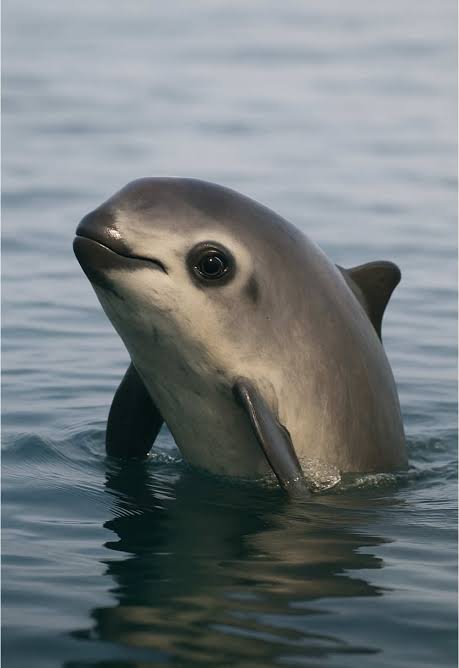
Illegal gillnetting for shrimp and other fish has proved a serious threat to the vaquita. Worst of all is the prohibited trade in the totoaba, a large endangered fish whose swim bladders are in high demand in the Chinese Traditional Medicine industry. The bladders can fetch more money per kilogram than cocaine, which means that organized crime networks from Mexico to China are anxious to continue their wholesale capture of totoaba — itself fully protected under Mexican law.
The problem for vaquitas comes from their similarity in size to the totoaba. Gillnets designed to catch totoaba are thus especially dangerous to vaquitas. The vaquita's numbers have declined precipitously in the last couple of decades. Recent news reports saying that the vaquita may be down to seven individuals worldwide have thus surprised very few people familiar with the vaquita and its plight.
So like I said, I was startled when Dr. Rojas-Bracho told me there is reason for optimism that the vaquita can recover. All we need to do is remove the gillnets from the Sea of Cortez. We talked about how that can happen, as daunting a project as it may seem, and it turns out there are important things those of us not living in Mexico can do to help.
I think you're going to like what he says. You can listen here:
As always, please share the episode, and this email, with anyone you think might be interested.
We have some exciting news coming up soon here at the Desert Advocacy Media Network, some of which we will be announcing shortly. But I can share this much with you now: we are very close to launching our Fellowship for Desert Reporting, in which we will be selecting about half a dozen promising desert journalists-in-training to work with us on projects that will eventually end up on our podcast, and in other venues as well.
If you know an aspiring journalist who might benefit from a stipend in the low four figures and some on-the-job training and mentoring over the course of a fellowship, send them my way. I can be reached at chris@90milesfromneedles.com. Keep in mind that when we say we're looking for emerging journalists, we don't necessarily mean "young," or "professionally trained." Passion, facility with language, and love for the deserts are what we're looking for. We should have a formal online application form ready to go by the next time you get one of these emails.
And if you'd like to donate to help us put together more than one cohort of Fellows, you can do so here.
As always, thanks for reading and listening! We thrive on your kind words and sharing our work with others. Let us know what you think!
Member discussion